

NEUROPSYCHIC AND SOCIAL ASPECTS OF READINESS FOR THE SCHOOL EDUCATION OF PREPARATORY GROUP CHILDREN IN PRESCHOOL EDUCATIONAL INSTITUTIONS
Main Article Content
Abstract
The aim of the investigation is to study neuropsychic and social aspects of children’s school maturity. The research considers 7 year-old children in preparatory groups of preschool educational institutions in Kemerovo.
Materials and methods. The study was conducted after obtaining voluntary consent from legal representatives. For the period 2020-2021, 257 children studying in preschool educational institutions of Kemerovo were examined. All of them were attached to the preschool department of the Сhildren polyclinic in M.A. Podgorbunsky Regional Clinical Hospital Ambulance. There were 119 boys (average age was 7 years and 3 months ± 1.46 months) and 138 girls (average age was 7 years and 2 months ± 1.67 months). The study of the neuropsychological aspects was carried out using Kern-Jirasek test and the monometric test. The level of social maturity and general psychological readiness to attend secondary educational institutions was determined by the test conversation proposed by S.A. Bankov. To study the social status of families, a survey of legal representatives was conducted through a standardized questionnaire.
Results. Studying the neuropsychological aspects of school maturity, the vast majority of children according to Kern-Jirasek test (77.44 %) and the monometric test (71.20 %) were ready to start attending secondary educational institutions. Every forth/fifth child had low indicators of the neuropsychic aspect of school maturity, which required corrective medical and pedagogical measures. The study of the social aspects in school maturity (the test conversation by S.A. Bankov) indicated the vulnerability of this parameter: only 40.46 % of children were socially mature; 30.74% showed a medium level of maturity; 28.80 % of children had low parameters of social maturity and general psychological readiness to attend school. Regarding family types, it was revealed that the most frequent variant of family relationships between parents was civil partnership. Open marriages were in 42.41 % of cases; two-parent families with a registered union were in 31.90 %; every fourth child had a single-parent family (25.68 %). Children with an insufficient level of neuropsychic and social readiness for school are more likely to be found in families with civil partnership.
Conclusion. The neuropsychological aspects of school maturity show that the vast majority of children according to the Kern-Jirasek test (77.44 %) and the monometric test (71.20 %) were ready to start attending secondary educational institutions. Every fourth/fifth child had low indicators of the neuropsychic aspect of school maturity, which required corrective medical and pedagogical measures. The study of the social aspects for school maturity (a test conversation by S.A. Bankov) indicated the children’s vulnerability: only 40.46 % of children were socially mature; 30.74 % showed an average level of maturity; 28.80 % had low parameters of social maturity and general psychological readiness to start school. The study of family types revealed that the most frequent variant of family relationships between parents was civil partnership. Such open marriages were found in 42.41 %; full families with a registered marriage were in 31.90 % of cases and every fourth child was raised in a single-parent family (25.68 %). Children with an insufficient level of neuropsychic and social readiness for school are more likely to be found in families with a civil partnership.
Keywords
Author Biographies
Илья Александрович Селиверстов,
assistant, department of polyclinic pediatrics, propaedeutics of children diseases and postgraduate trainingНина Константиновна Перевощикова,
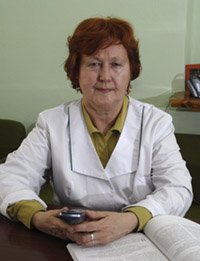
Perevoshchikova Nina Konstantinovna
MD, PhD, professor
She is the Head of the Department of Pediatrics and Propedeutics of Children's Diseases, the Honoured Doctor of the Russian Federation.
All of her work is in close cooperation with practical health care. She gives consultations to more than 800 sick children in various hospitals of the city of Kemerovo and region. She developed new methods of diagnostics and treatment for children with chronic bronchial asthma, which helped to create the City Medical Center for Children and a kind of Asthma-school for children and their parents, that is based on the Children's Clinical Hospital №1.Наталья Петровна Крекова,
head of children polyclinicСветлана Альбертовна Дракина,
candidate of medical sciences, docent of the department of polyclinic pediatrics, propaedeutics of children diseases and postgraduate trainingНаталья Степановна Черных,
candidate of medical sciences, docent, docent of the department of polyclinic pediatrics, propaedeutics of children diseases and postgraduate trainingArticle Details
Information about financing and conflict of interests
The authors declare that they have no apparent or potential conflicts of interest related to the publication of this article.
 This work is licensed under a Creative Commons Attribution 4.0 License.
How to Cite
References
Federal project «Development of children's healthcare, including the creation of a modern infrastructure for providing medical care to children», July 16, 2019 at 09:13. Russian (Федеральный проект «Развитие детского здравоохранения, включая создание современной инфраструктуры оказания медицинской помощи детям», 16 июля 2019 в 09:13.) https://minzdrav.gov.ru/poleznye-resursy/natsproektzdravoohranenie/detstvo
Order of the Ministry of Health of Russia dated August 10, 2017 No. 514n «On the Procedure for Conducting Preventive Medical Examinations of Minors». Russian (Приказ Минздрава России от 10 августа 2017 г. № 514н «О Порядке проведения профилактических медицинских осмотров несовершеннолетних»)
Order of the Ministry of Health of Russia dated December 21, 2012 No. 1348n «On approval of the Procedure for underage dispensary observation, including during the period of education and upbringing in educational institutions». Russian (Приказ Минздрава России от 21.12.2012 г. № 1348н «Об утверждении Порядка прохождения несовершеннолетними диспансерного наблюдения, в том числе в период обучения и воспитания в образовательных учреждениях»)
Baranov AA, Namazova-Baranova LS. The state of health and medical and social problems of adolescent children in the Russian Federation. In: Federal reference book. M., 2015. T. IV. P. 149-153. Russian (Баранов А.А., Намазова-Баранова Л.С. Состояние здоровья и медико-социальные проблемы детей подросткового возраста в Российской Федерации. В кн.: Федеральный справочник. М., 2015. Т. IV. С. 149-153)
Poretskova GYu. Results of regular health examination of schoolchildren as basis for developing customized prevention programs in the framework of medical support for educational process. Social aspects of population health. 2014; (6). Russian (Порецкова Г.Ю. Результаты диспансеризации школьников как основа для разработки индивидуальных профилактических программ в рамках медицинского обеспечения образовательного процесса //Социальные аспекты здоровья населения. 2014. № 6)
Bezrukikh MM. School and family risk factors, their impact on the physical and mental health of children. Bulletin of Psychological Practice in Education. 2011; 8(1): 16-21. Russian (Безруких М.М. Школьные и семейные факторы риска, их влияние на физическое и психическое здоровье детей //Вестник практической психологии образования. 2011. Т. 8, № 1. С. 16-21)
Kuchma VR, Efimova NV, Tkachuk EA, Mylnikova IV. Hygienic assessment of the overwroughtness of educational activity in schoolchildren of 5-10 classes of secondary schools. Hygiene and Sanitation. 2016; 95(6): 552-558. Russian (Кучма В.Р., Ефимова Н.В., Ткачук Е.А., Мыльникова И.В. Гигиеническая оценка напряженности учебной деятельности обучающихся 5-10 классов общеобразовательных школ //Гигиена и санитария. 2016. Т. 95, № 6. С. 552-558)
Grebennikova OA, Dobrolyubova MI. Bullying in the educational environment as a threat to the health of schoolchildren. The periodical scientific and methodological electronic journal «Koncept». 2017; S9: 13-18. Russian (Гребенникова О.А., Добролюбова М.И. Буллинг в образовательной среде как угроза здоровью школьников //Научно-методический электронный журнал «Концепт». 2017. № S9. С. 13-18.) URL: http://e-koncept.ru/2017/470113.htm
Abdullin AG, Pruchkina NM, Bobleter D. Psychological aspects of the correction of emotional disturbances as a means of activating preschool children. Gumanitarnyye nauki (Yalta). 2020; 1(49): 115-121. Russian (Абдуллин А.Г., Пручкина Н.М., Боблетер Д. Психологические аспекты коррекции эмоциональных нарушений как средство активизации детей дошкольного возраста //Гуманитарные науки (г. Ялта). 2020. № 1(49). С. 115-121)
Matkovskaya TV, Samarina SV. Neuropsychic development of children of early and preschool age: Guidelines for doctors of preschool and medical institutions. Tomsk, 2009. 71 p. Russian (Матковская Т.В., Самарина С.В. Нервно-психическое развитие детей раннего и дошкольного возраста: Методические рекомендации для врачей детских дошкольных и лечебно-профилактических учреждений. Томск, 2009. 71 с.)
Byorklund A, Salvanes H. As the family influences education of the child. Economy of education. 2013; 1: 35a-43. Russian (Бьорклунд А., Сальванес Х. Как семья влияет на образование ребёнка //Экономика образования. 2013. № 1. С. 35a-43)
Yakushev PA. Actual cohabitation of men and women: problems of institutionalization in the context of traditional values. State and Law. 2019; (12): 104-112. Russian (Якушев П.А. Фактические сожительства мужчин и женщин: проблемы институциализации в контексте традиционных ценностей //Государство и право. 2019. № 12. C. 104-112)
Hachatryan LA. Modern russian family. Perm University Herald. Series «Philosophy. Psychology. Sociology». 2014; 4(20): 111-120. Russian (Хачатрян Л.А. Тенденции изменения современной российской семьи //Вестник Пермского университета. Философия. Психология. Социология. 2014. Т. 4, № 20. С. 111-120)
Novikova SV. Psychological preparation is the leading factor in children's readiness for school. The periodical scientific and methodological electronic journal «Koncept». 2019; 6: 13. Russian (Новикова С.В. Психологическая подготовка – ведущий фактор готовности детей к школе //Научно-методический электронный журнал «Концепт». 2019. № 6. С. 13.) doi: 10.24411/2304-120X-2019-12022
Batrakova LV, Nefedov PV. On preparedness of the children attending municipal preschool educational institutions in rural areas of the Krasnodar region to systematic schooling. Public Health and Life Environment – PH&LE. 2020; 2(323): 12-15. Russian (Батракова Л.В., Нефедов П.В. О готовности воспитанников муниципальных дошкольных образовательных учреждений сельской местности Краснодарского края к систематическому обучению в школе //Здоровье населения и среда обитания – ЗНИСО. 2020. № 2(323). С. 12-15.) doi: 10.35627/2219-5238/2020-323-2-12-15
Borzova OM, Danilova MV. Psychological readiness for educational activity of senior preschoolers. World of Science. Pedagogy and Psychology. 2019; 7(6): 61. Russian (Борзова О.М., Данилова М.В. Психологическая готовность к учебной деятельности старших дошкольников //Мир науки. Педагогика и психология. 2019. Т. 7, № 6. С. 61)