

THE ROLE OF PARENT-CHILD RELATIONSHIPS IN THE FORMATION OF PSYCHOSOMATIC DISORDERS
Main Article Content
Abstract
Modern family and its problems are the object of study of several Sciences: medicine, psychology, pedagogy, sociology, demography, Economics. From the nature of the parent-child relationship depends on how the game will develop the child's relationship with the world, what position in life will choose already grown kid and then an adult. Parental support is important at any age, as the deficit becomes the cause of pronounced mental and physical maturation of the child, the disintegration of affection as the most important factor of mental development, maladjustment, psychosomatic disorders. In the article the importance of child-parent relationship is demonstrated on the example of classical psychosomatic diseases – bronchial asthma.
The purpose of the study – defining the role of parent-child relationships in the implementation of bronchial asthma in children.
Material and methods. To identify various psychological deviations in the relationship of parents to children and causes of these violations were used in the questionnaire «Analysis of family relations» as E.G. Eidemiller, W. Justices. In assessing psychological status were studied personality traits of adolescents using a multi-factor questionnaire by R.B. Kettell. Local alarms – school, interpersonal, self-assessment, the magic were determined using questionnaire A.M. Prichoschan.
Conclusion. Pathogenic in most cases, the parent-child relationship is highly correlated with personal traits of adolescents that stresses the leading role of the family in shaping the character of a teenager, his relationship to the disease, the level of trust in adults. An integrated approach to the rehabilitation of adolescent patients with asthma using interagency collaboration has allowed to improve the quality of their training in the «Asthma-school». Conducting corrective treatment contributed to the improvement of psycho-emotional status of adolescents, the normalization they have a trusting relationship with parents and the doctor, which further allowed us to regain control over the course of the disease.
Keywords
Author Biographies
Светлана Альбертовна Дракина,
candidate of medical sciences, assistante, department of polyclinic pediatricscandidate of medical sciences, assistante, department of polyclinic pediatricsНина Константиновна Перевощикова,
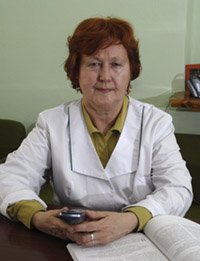
Perevoshchikova Nina Konstantinovna
MD, PhD, professor
She is the Head of the Department of Pediatrics and Propedeutics of Children's Diseases, the Honoured Doctor of the Russian Federation.
All of her work is in close cooperation with practical health care. She gives consultations to more than 800 sick children in various hospitals of the city of Kemerovo and region. She developed new methods of diagnostics and treatment for children with chronic bronchial asthma, which helped to create the City Medical Center for Children and a kind of Asthma-school for children and their parents, that is based on the Children's Clinical Hospital №1.Галина Петровна Торочкина,
candidate of medical sciences, docent, department of polyclinic pediatricsArticle Details
Information about financing and conflict of interests
The authors declare that they have no apparent or potential conflicts of interest related to the publication of this article.
 This work is licensed under a Creative Commons Attribution 4.0 License.
How to Cite
References
Ширяева, О.А. Особенности эмоционального взаимодействия часто болеющих и здоровых детей раннего возраста с родителями /О.А. Ширяева //Вестник Красноярского государственного педагогического университета им. В.П. Астафьева. – 2014. – № 3. – С. 209-214
Филиппова, Г.Г. Психология материнства /Филиппова Г.Г. – М.: Изд-во Института психотерапии. – 2009. – 2008 с.
Куликов, Л.В. Психология личности в трудах отечественных психологов /Куликов Л.В. – СПб.: Питер. – 2009. – 283 с.
Аликин, И.А. Нормативная динамика родительского отношения в современном обществе: возрастные и гендерные аспекты /И.А. Аликин, Н.В. Лукьянченко //Вестник Красноярского государственного педагогического университета им. В.П. Астафьева. – 2012. – № 4. – С. 228-234
Галигузова, Л.Н. Как развивается малыш в раннем возрасте /Галигузова Л.Н. – М., 2008. - 187 с.
Менделевич, В.Д. Клиническая и медицинская психология: учебное пособие /В.Д. Менделевич. – М.: МЕДпресс-информ, 2008. – 432 с.
Истратова, О.Н. Большая книга подросткового психолога /О.Н. Истратова, Т.В. Эксакусто. – Ростов н/Д.: Феникс, 2008. – 636 с.
Коваль, В.В. Подростки из неполных семей: особенности самоотношения /В.В. Коваль //Мир науки, культуры, образования. – 2011. – № 2. – С. 238-240
Эйдемиллер, Э.Г. Методы семейной диагностики и психотерапии: методическое пособие /Э.Г. Эйдемиллер. – М.: Фолиум, 1996. – 48 с.
Лазарева, Т.А. Воспитательные позиции родителей и их оценка подростками /Т.А. Лазарева //Известия Российского гос. педагогического ун-та им. А.И. Герцена. – 2009. – № 94. – С. 284-290
Захаров, А.И. Неврозы у детей и подростков /А.И. Захаров. – СПб.: Союз, 1998. – 246 с.
Лидерс, А.Г. Психологическое обследование семьи: учебное пособие /А.Г. Лидерс. – М.: Издательский центр «Академия», 2006. – 432 с.