

THE ROLE OF THE FAMILY IN FORMING HEALTHY LIFESTYLE OF CHILDREN OF PRESCHOOL AGE
Main Article Content
Abstract
Family is an important part of socialization of the child, and the process of formation of health depends not only on the family's financial situation, social status and parental education, but also on their value orientations, the depths of the paternal and maternal feelings, understanding parental duty, desire and the desire to work with children, educate and train them.
Goal – evaluation of the influence of family on forming of healthy lifestyle of children of preschool age.
Materials and methods. The study involved 116 children who were divided into three groups: one group comprised children attending swimming lessons twice a week (n = 54); the second group of children (n = 30) engaged in other sports (dancing, wrestling, football, hockey); the third group (n = 32) children not attending sports clubs. There was evaluated the state of health of children and psychological characteristics (test anxiety Tamela R., Amen V., Dorcy M. «Select the desired entity»), the quality of life for Tsybulskaya I.S., analysis of family relationships according to Eidemiller E.G., Justices V.V.
The results of the study. Parent's attitude to the sport was different in all groups. The parents were not engaged in physical culture regularly (at least 1 time per week) – 38 % of mothers and 36 % fathers in the first group, 43 % of mothers and 46 % of the fathers of the second group and 90.5 % of mothers (p = 0,0086) and 76 % of fathers (p = 0,0089) in the group of children not involved in sports. In the evaluation of physical development was noted significantly more excess body weight, children had 3 groups (21,88 % against 7.4 % in the first and 7.67 per cent in the second, p = 0,0394). The incidence of statistically significantly more frequently recorded diseases of the nervous system and the respiratory system in the group of children with low physical activity. In the evaluation of mental health revealed that among children not involved in sports more often were diagnosed with low anxiety level, quality of life and pathological style of parent-child relationships.
Conclusions. Family relationships are closely intertwined with the socio-economic characteristics of the family, and the result of the assessment is the child's health.Keywords
Author Biographies
Светлана Николаевна Виниченко,
a pediatrician, postgraduate student, department of polyclinic pediatricsНина Константиновна Перевощикова,
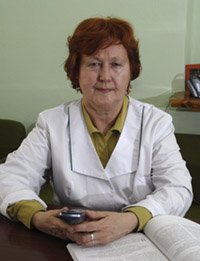
Perevoshchikova Nina Konstantinovna
MD, PhD, professor
She is the Head of the Department of Pediatrics and Propedeutics of Children's Diseases, the Honoured Doctor of the Russian Federation.
All of her work is in close cooperation with practical health care. She gives consultations to more than 800 sick children in various hospitals of the city of Kemerovo and region. She developed new methods of diagnostics and treatment for children with chronic bronchial asthma, which helped to create the City Medical Center for Children and a kind of Asthma-school for children and their parents, that is based on the Children's Clinical Hospital №1.Светлана Альбертовна Дракина,
candidate of med. sciences, assistant of department of polyclinic pediatricsНаталья Степановна Черных,

Natalya Chernih
PhD, Associate professor of polyclinic pediatrics department.
Responsible secretary of an editorial board of the journal Mother and Baby in Kuzbass.
Article Details
Information about financing and conflict of interests
The authors declare that they have no apparent or potential conflicts of interest related to the publication of this article.
 This work is licensed under a Creative Commons Attribution 4.0 License.
How to Cite
References
Tyumaseva ZI, Orekhova IL, Sosnina EG. Improvement of children of Russia as innovative teaching (early childhood education). Chelyabinsk, 2012. 299 p. Russian (Тюмасева З.И., Орехова И.Л., Кушнина Е.Г. Оздоровление детей России как инновационная педагогическая деятельность (в сфере дошкольного образования). Челябинск, 2012. 299 с.)
Anisimova AV, Perevoshchikova NK. Modern problems of formation of health of children and adolescents. Mother and Child in Kuzbass. 2013; 2: 8-14. Russian (Анисимова А.В., Перевощикова Н.К. Современные проблемы формирования здоровья детей и подростков //Мать и Дитя в Кузбассе. 2013. № 2. С. 8-14)
Shvedovskaya AA, ZagvozdkinaTYu. The concept «socio-economic status of a family» (SES): A review of international research. Psychological Science and Education. 2013; 1: 65-76. Russian (Шведовская А.А., Загвоздкина Т. Ю. Социально-экономический статус семьи и психическое развитие ребенка: зарубежный опыт исследования //Психологическая наука и образование. 2013. № 1. С. 65-76)
Romankova YN, Adzhigerimova GS, Yaroslavtsev AS. Characteristics of medical social factors, conditions and lifestyle as a risk factor for children's health. Fundamental research. 2013; 12-2: 314-318. Russian (Романкова Ю.Н., Аджигеримова Г.С., Ярославцев А.С. Характеристика медико-социальных факторов, условий и образа жизни как факторов риска для здоровья детей //Фундаментальные исследования. 2013. № 12-2. С. 314-318)
Viatkina LB. Differences in psychologi cal development of pre-school children depending on the one-parent and full family. Fundamental research. 2013; 10-2: 442-445. Russian (Вяткина Л.Б. Особенности психического развития детей старшего дошкольного возраста, воспитывающихся в неполной/полной семье //Фундаментальные исследования. 2013. № 10-2. С. 442-445)
Solntseva AV. Importance of family education for child overweight development. Healthcare (Minsk). 2015; 2: 56-61. Russian (Солнцева А.В. Значение факторов семейного воспитания в формировании избыточной массы тела у детей //Здравоохранение (Минск). 2015. № 2. С. 56-61)
Kuragina TV. Fundamentals of family education. Models of relations in the family. Components of the content of family education. Fundamental and applied researches: challenges and results. Fundamental'nye i prikladnye issledovanija: problemy i rezul'taty. 2012; 1: 75-79. Russian (Курагина Т.В. Основы семейного воспитания. Модели отношений в семье. Составные компоненты содержания семейного воспитания //Фундаментальные и прикладные исследования: проблемы и результаты. 2012. № 1. С. 75-79)
Veyts AE. The influence of family surroundings on the peculiarities of emotional disorders in children with neurosis-like disorders and neuroses. Bulletin of the South Ural State University. Series: Psychology. 2012; 31: 72-78. Russian (Вейц АЭ. Влияние семейного окружения на особенности эмоциональных нарушений у детей с неврозами и неврозоподобными расстройствами //Вестник Южно-Уральского государственного университета. Серия: Психология. 2012. № 31. С. 72-78)
Byun W, Dowda M, Pate RR. Correlates of objectively measured sedentary behavior in US preschool children. Pediatrics. 2011; 128(5): 937-945
Evgrafova N. [Influence of family on psychological health of the child. Pedagogical skills: the materials of VI intern. scient. conf. (Moscow, June 2015). M.: Buki-Vedi, 2015. P. 51-52. Russian (Евграфова Н.Ю. Влияние семьи на психологическое здоровье ребёнка //Педагогическое мастерство: матер. VI междунар. науч. конф. (г. Москва, июнь 2015 г.). М.: Буки-Веди, 2015. С. 51-52)
Test anxiety R. Temml, M. Dorcas, V. Amen. The method of «Select face». Projective diagnostics of children. Source: http://psycabi.net/testy/645-test-trevozhnosti-r-temml-m-dorki-v-amen-metodika-vyberi-nuzhnoe-litso-proektivnaya-diagnostika-detej. Russian (Тест тревожности Р. Тэммл, М. Дорки, В. Амен. Методика «Выбери нужное лицо». Проективная диагностика детей. Источник: http://psycabi.net/testy/645-test-trevozhnosti-r-temml-m-dorki-v-amen-metodika-vyberi-nuzhnoe-litso-proektivnaya-diagnostika-detej)
Son IM, Tsybulskaya IS, Baybarina EN et al. The methodology of evaluation of the health status of children of different age periods according to the criteria of their lives: method. Manual. M., 2005. 28 p. Russian (Сон И.М., Цыбульская И.С., Байбарина Е.Н. и др. Методология оценки состояния здоровья детей различных возрастных периодов по критериям их жизни: метод. пособие. М.: РИО ЦНИИОИЗ, 2005. 28 с.)
Eidemiller YuG, Dobrakov VI, Nikolskaya IM. Family diagnosis and family psychotherapy: a training manual for physicians and psychologists: A manual for physicians and psychologists. SPb: Rech', 2006. 352 p. Russian (Эйдемиллер Ю.Г., Добряков И.В., Никольская И.М. Семейный диагноз и семейная психотерапия: Учебное пособие для врачей и психологов. СПб.: Речь, 2006. 352 с.)