

POSSIBILITIES OF PREVENTION OF ALLERGIC DISEASES TAKING INTO ACCOUNT REGIONAL PECULIARITIES
Main Article Content
Abstract
The increasing growth of allergic diseases is pandemic. The International Study of Asthma and Allergies in Childhood (ISAAC) has discovered high frequency variability of symptoms of bronchial asthma (BA) and atopic dermatitis (AtD) even within one country due to climatic, environmental factors, lifestyle and condition of healthcare system. The accomplishments concerning the treatment of BA and AtD, that were achieved during the last few years and were regulated by the list of consensus documents, did not assist the decrease of their prevalence. The ability to protect a child, who predisposed to atopy from the exposure to precipitating factors, helps to prevent its realization in the phenotype of allergic diseases. The prevention of allergic diseases must be provided with a variety of measures and carried out at all stages of human life from prenatal period.
The aim – the decrease of allergic diseases frequency among children.
Materials and methods. The researches were conducted in 3 stages. At the first stage there were discovered the features of development of BA in children living in Yurga, Kemerovo region, and there was studied the importance of ecological factors of the environment. At the second stage, taking into account the peculiarities of the development and course of BA, the children with AtD were examinedand sent for treatment aimed at the prevention of AtD transformation into BA. At the third stage within the framework of «Atopy School» there was developed a complex of pre- and postnatal prevention of allergic diseases in children at risk.
The results. Regional characteristics of Yurga contribute to the realization of AD incidence in children with hereditary predisposition. There was proved the role of opportunistic pathogenic microflora in the development of AtD (70 %), there was also confirmed the dependence of clinical symptoms from the bacteria type. There was developed a program of managing children with atopic dermatitis involving sanitation of bowel using specialized bacteriophages. There was also created «Atopy School» program of managing women with the atopic disease, which works according to the «woman ®pregnant ® fetus ® newborn ® child» principle and provides primary prevention of atopic disease in children at risk.
Conclusion. The implementation of the program of secondary and primary prevention of atopic diseases has reduced the AtD and BA prevalence among children.
Keywords
Author Biographies
Нина Константиновна Перевощикова,
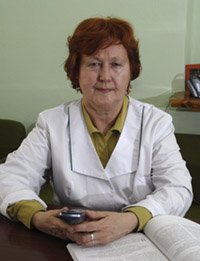
Perevoshchikova Nina Konstantinovna
MD, PhD, professor
She is the Head of the Department of Pediatrics and Propedeutics of Children's Diseases, the Honoured Doctor of the Russian Federation.
All of her work is in close cooperation with practical health care. She gives consultations to more than 800 sick children in various hospitals of the city of Kemerovo and region. She developed new methods of diagnostics and treatment for children with chronic bronchial asthma, which helped to create the City Medical Center for Children and a kind of Asthma-school for children and their parents, that is based on the Children's Clinical Hospital №1.Сергей Федорович Гладков,
a pediatrician, children's allergistНаталья Степановна Черных,

candidate of medical sciences, docent, department of polyclinic pediatrics
Article Details
Information about financing and conflict of interests
The authors declare that they have no apparent or potential conflicts of interest related to the publication of this article.
 This work is licensed under a Creative Commons Attribution 4.0 License.
How to Cite
References
Lavrova TE, Makarova SG. Possibilities of induction of oral tolerance as a response to the allergic epidemics. J. «Pediatria» named after G.N. Speransky. 2015; 94(4): 151-157. Russian. (Лаврова Т.Е., Макарова С.Г. Возможности индукции оральной толерантности как ответ на эпидемию аллергии //Педиатрия. Журнал имени Г.Н. Сперанского.2015. Т. 94. № 4. С. 151-157)
Romano-Keeler J, Weitkamp JH. Maternal influences on fetal microbial colonization and immune development. Pediatr Res. 2015; 77(1-2): 189-195. doi: 10.1038/pr.2014.163
Egshatyan LV, Tkacheva ON, Kafarskaya LI, Shkoporov AN, Tyakht AV. The changes of gut microbiota associated with age and lifestyle. Obesity and Metabolism. 2015; 12(2): 3-9. Russian. (Егшатян Л.В., Ткачева О.Н., Кафарская Л.И., Шкопоров А.Н., Тяхт А.В. Изменение кишечной микрофлоры, ассоциированные с возрастом и образом жизни //Ожирение и метаболизм. 2015. № 12(2). С. 3-9)
Moles L, Gomez M, Heilig H, Bustos G, Fuentes S, de Vol W et al. Bacterial diversity in miconium of preterm neonates and evolution of their fecal microbiota during the first month of life. PLoS One. 2013; 8(6): е66986
Maksimova OV, Gervazieva VB, Zverev VV. Intestine microbiota and allergic diseases. J. Microbiology, Epidemiology and Immunobiology. 2014; 3: 49-60. Russian. (Максимова О.В., Гервазиева В.Б., Зверев В.В. Микробиота кишечника и аллергические заболевания //Журнал микробиологии, эпидемиологии и иммунобиологии. 2014. № 3. С. 49-60)
Manlal RS, Saha S, Das S. Metagenomik Surveys of Gut Microbiota. Genomics Proteomics Bioinformatics. 2015: 13(3): 148-158.
Maccaferri S, Biagi E, Brigidi P. Metagenomics key to human gut microbiota. Dig. Dis. 2011; 29(6): 525-530
Houghling PD, Walker WA. Why Is Initial Bacterial Colonization of the Intestine Important to Infantsʼ and Childrenʼs Health? JPGN. 2015: 60(3): 294-307
Belyaeva IA, Bombardirova EP, Turti TV, Mitish MD, Potekhina TV. Intestinal microbiota in premature children – the modern state of the problem (literature analysis). Pediatric Pharmacology. 2015; 12(3) 296-303. Russian. (Беляева И.И., Бомбардирова Е.П., Турти Т.В., Митиш М.Д., Потехина Т.В. Кишечная микробиота у недоношенных детей – современное состояние проблемы (обзор литературы) //Педиатрическая фармакология. 2015. Т. 12, № 3. С. 296-303)
Treneva MS, Pampura AN. Primary prevention of atopic dermatitis in children: current state of problematics and prospects for overcoming the crisis. J. «Pediatria» named after G.N. Speransky. 2015; 94(4): 8-13. Russian. (Тренева М.С., Пампура А.Н. Первичная профилактика атопического дерматита у детей: состояние проблемы и перспективы выхода из кризиса //Педиатрия. Журнал имени Г.Н. Сперанского. 2015. Т. 94. № 4. С. 8-13)
Perevoshchikova NK, Gladkov SF. Opportunities for primary prevention of allergic diseases in children of early age. Mother and Baby in Kuzbass. 2013; (3): 4-11. Russian. (Перевощикова Н.К., Гладков С.Ф. Возможности первичной профилактики аллергических заболеваний у детей раннего возраста //Мать и Дитя в Кузбассе. 2013. № 3. С. 4-11)
Zakharova IN. Microbiome, microbiota. Any news? Medical Council. 2016; (16): 92-97. Russian. (Захарова И.Н. Микробиом, микробиота. Что нового? //Медицинский Совет. 2016. № 16. С. 92-97)
Topchiy NV, Toporkov AS. Bacteriophages in the treatment of acute intestinal infections. Medical Council. 2015; (8): 74-81. Russian. (Топчий Н.В., Топорков А.С. Бактериофаги в лечении острых кишечных инфекций //Медицинский совет. 2015. № 8. С. 74-81)
Comprehensive program for the development of biotechnology in the Russian Federation for the period until 2020. Approved by the Government of the Russian Federation of 24.04.2012 No. 1853p-P8. Russian. (Комплексная программа развития биотехнологий в Российской Федерации на период до 2020 года. Утверждено Правительством РФ 24.04.2012г. №1853п-П8)
Zaitseva OV. HyperIgE syndrome. J. «Pediatria» named after G.N. Speransky. 2016; 95(4): 116-123. Russian. (Зайцева О.В. Синдром ГиперIgE //Педиатрия. Журнал имени Г.Н. Сперанского. 2016. Т. 95. № 4. С. 116-123)