

ADHERENCE TO A COMPREHENSIVE REHABILITATION PROGRAM AFTER CORONARY ARTERY BYPASS GRAFTING: A CHALLENGE FOR A PATIENT OR A PHYSICIAN?
Main Article Content
Abstract
Aim – to assess the awareness of patients referred to elective coronary artery bypass grafting (CABG) about cardiac rehabilitation programs and to evaluate the adherence of cardiologists to appoint exercise outpatient cardiac rehabilitation to CABG patients.
Methods. 124 patients with stable coronary artery disease were surveyed to estimate their awareness about postoperative cardiac rehabilitation program and its structure as well as their wishes to participate in these programs. 44 cardiologists were surveyed to evaluate their awareness of exercise cardiac rehabilitation programs after CABG.
Results. Most patients were confident in the need of cardiac rehabilitation, but a few of them participated in the cardiac rehabilitation programs. One of the major reasons for patients’ poor adherence to exercise cardiac rehabilitation is insufficient knowledge on the indications and contraindications to exercise outpatient rehabilitation. In addition, cardiologists had insufficient knowledge on the effectiveness of exercise cardiac rehabilitation resulting in a high rate of patients’ refusal to participate in these programs.
Conclusion. Patients’ motivation for treatment and its retention for a long-term period may require specific patient education to raise their awareness about cardiac rehabilitation. In addition, physicians’ adherence to the appointment of exercise cardiac rehabilitation programs should be improved.Keywords
Author Biographies
Светлана Александровна Помешкина,
doctor of medical sciences, head of laboratory of rehabilitationВалентина Анатольевна Беззубова,
graduate studentЮлия Александровна Аргунова,
candidate of medical sciences, scientific fellow, laboratory of rehabilitationОльга Леонидовна Барбараш,
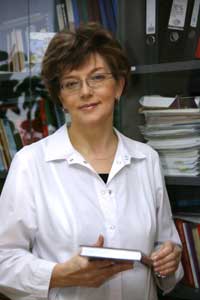
Barbarash Olga Leonidovna
MD, PhD, director
Article Details
Information about financing and conflict of interests
The authors declare that they have no apparent or potential conflicts of interest related to the publication of this article.
 This work is licensed under a Creative Commons Attribution 4.0 License.
How to Cite
References
Kotseva K, Wood D, De Bacquer D et al. EUROASPIRE IV: A European Society of Cardiology survey on the lifestyle, risk factor and therapeutic management of coronary patients from 24 European countries. 2016 Apr; 23(6): 636-648. DOI: 10.1177 / 2047487316667784
Kotseva K, Wood D, De Backer G et al. Use and effects of cardiac rehabilitation in patients with coronary heart disease: results from the EUROASPIRE III survey. Eur. J. Prev. Cardiol. 2013. 20(5): 817-26. DOI: 10.1177 / 2047487312449591
Mendes M. Is There a Role for Cardiac Rehabilitation After Coronary Artery Bypass Grafting? There is No Role for Cardiac Rehabilitation After Coronary Artery Bypass Grafting. Circulation. 2016; (133)24: 2538-2544. DOI: 10.1161/ CIRCULATIONAHA.115.017800
Monte IP, Mangiafico S, Buccheri S et al. Myocardial deformational adaptations to different forms of training: a real-time three-dimensional speckle tracking echocardiographic study. Heart Vessels. 2015. 30(3): 386-395. DOI: 10.1007 / s00380-014-0520-9
Pomeshkina SA, Kondrikova NV, Barbarash OL. Assessment of the capacity of patients who underwent coronary bypass surgery. Complex problems of cardiovascular diseases. 2014; 1: 26-30. Russian (Помешкина СА, Кондрикова НВ, Барбараш ОЛ. Оценка трудоспособности пациентов, подвергшихся коронарному шунтированию //Комплексные проблемы сердечно-сосудистых заболеваний. 2014. № 1. С. 26-30)
Pomeshkin SA, Borovik IV, Krupianko EB et al. Adherence to non-pharmacological treatment of patients with coronary heart disease who underwent coronary bypass surgery. Atherosclerosis. 2013; 1: 29-35 Russian (Помешкина С.А., Боровик И.В., Крупянко Е.В. и др. Приверженность к немедикаментозной терапии больных ишемической болезнью сердца, подвергшихся коронарному шунтированию //Атеросклероз. 2013. № 1. С. 29-35)
Aronov D. Successes and problems of cardio rehabilitation in Russia. Effective pharmacotherapy. 2011; 1: 22-28. Russian (Аронов Д.М. Успехи и проблемы кардиореабилитации в России //Эффективная фармакотерапия. 2011. № 12. С. 22-28)
Sumin AN, Bezdenezhnykh AV, Ivanov SV, Barbarash OL, Barbarash LS. Multifocal atherosclerosis in patients with ischemic heart disease: effect on immediate coronary bypass results. Heart: Journal for Practitioners. 2014; 1(75): 11-17. Russian (Сумин А.Н., Безденежных А.В., Иванов С.В., Барбараш О.Л., Барбараш Л.С. Мультифокальный атеросклероз у больных ишемической болезнью сердца: влияние на непосредственные результаты коронарного шунтирования //Сердце. 2014. Т. 13, № 1(75). С. 11-17)
Kwan G, Balady GJ. Cardiac Rehabilitation 2012: advancing the field through emerging science. Circulation. 2012; 125: 369-373
Pomeshkina SA, Kondrikova NV, Krupianko EV et al. An analysis of approaches to assessing persistent disability in patients who underwent coronary bypass surgery. Cardiology. 2013; 7: 62-5 Russian (Помешкина С.А., Кондрикова Н.В., Крупянко Е.В. и др. Анализ подходов к оценке стойкой утраты трудоспособности у пациентов, подвергшихся коронарному шунтированию //Кардиология. 2013. № 7. С. 62-68)
McMurray JJ, Adamopoulos S, Anker SD et al. ESC Guidelines for the diagnosis and treatment of acute and chronic heart failure 2012: The Task Force for the Diagnosis and Treatment of Acute and Chronic Heart Failure 2012 of the European Society of Cardiology. Developed in collaboration with the Heart Failure Association (HFA) of the ESC. Eur. Heart J. 2012; 33(14): 1787-1847
Hillis LD, Smith PK, Anderson JL et al. 2011 ACCF/AHA Guideline for Coronary Artery Bypass Graft Surgery A Report of the American College of Cardiology Foundation/American Heart Association Task Force on Practice Guidelines. Circulation. 2011; 124: 652-735
Vinogradova NG. The effectiveness of specialized medical care in patients with chronic heart failure. Russian Journal of Heart Failure. 2017; 18(2): 122-132. Russian (Виноградова Н.Г. Эффективность специализированной медицинской помощи у пациентов с хронической сердечной недостаточностью //Российский журнал сердечной недостаточности. 2017. Т. 18, № 2. С. 122-132)